Before ordering tteokbokki, think about the spice level you would enjoy and any ingredients you need to avoid. A milder version may still contain an ingredient you cannot eat, and rice-based cakes tell you little about the sauce or broth.
You do not have to prove how much spice you can handle. Choose a version you would enjoy from the options the shop can offer.
Check which version the shop serves
The Korea Tourism Organization’s tteokbokki guide describes the familiar chilli-paste version and a soy-sauce variation. That shows the dish has variations; it does not mean every shop offers a mild option or can change a prepared sauce.
Another KTO feature on rice cakes distinguishes rice- and wheat-based cakes. Ask which one the shop uses if it affects your choice. Even if the cakes are made from rice, check the rest of the dish before assuming it is gluten-free.
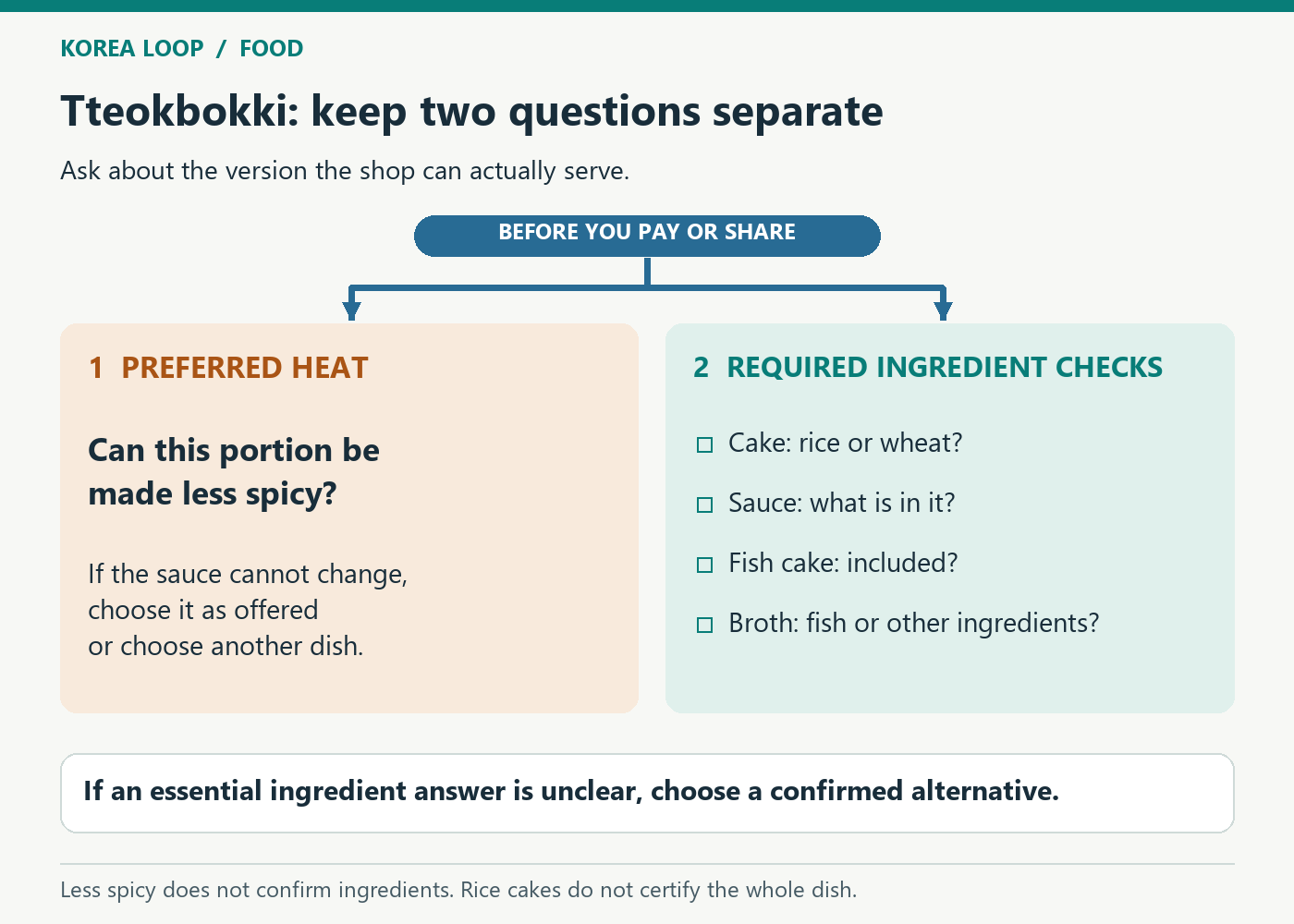
Two separate decisions before you order
| Your question | What to ask | What you still need to check |
|---|---|---|
| Can I choose less heat? | Can this portion be made less spicy? | Whether it meets an ingredient restriction |
| Which cake is used? | Rice cake or wheat cake? | The ingredients of sauce, broth or add-ins |
| Is fish involved? | Ask about fish cake and the broth separately | Whether removing visible fish cake changes the broth |
| Can the dish be changed? | Ask before the portion is served or cooking begins | Whether a prepared shared pan can be remade for you |
Scroll the table sideways if needed.
If you simply want to try the dish, you may only need the first question and the portion size. If you must avoid an ingredient, work through the relevant parts before paying. Keep a clear distinction between a taste preference and a condition you must follow.
How the shop cooks it affects what you can change
A KTO feature on tteokbokki styles describes prepared tteokbokki and jeukseok tteokbokki cooked at the table. If a vendor is serving from a pan already cooked for many customers, changing one portion may be harder than changing an order before preparation. That is a practical possibility to bear in mind; ask the vendor rather than assuming they cannot help.
Look at how the order is being prepared and ask what is possible. If the answer is that the sauce cannot be changed, decide whether you want that dish as it is. Adding cheese or another topping should not be treated as a reliable way to remove chilli already present, and the extra topping may also contain ingredients someone at your table needs to avoid.
At a table-cooked meal, ask who will manage the heat and when the ingredients are ready. Do not assume every item can be eaten as soon as the pan is set down. Confirm add-ins and their prices before they go into the shared pot.
Ask about the broth even when you skip fish cake
The KTO bunsik guide describes eomuk as fish-based and describes anchovy broth used for fish cakes. Recipes vary, but these examples show why a dish with no visible meat may still contain fish.
Removing a piece of fish cake does not remove ingredients already in the broth. Likewise, a cake made from rice does not answer questions about seasonings or shared preparation. If you have an allergy or another strict restriction, describe the actual ingredient and ask about preparation as well. When the answer remains unclear, choose a confirmed alternative.
Three questions to keep on your phone
- 덜 맵게 할 수 있나요? — Can you make it less spicy?
- 쌀떡인가요, 밀떡인가요? — Are the cakes made from rice or wheat?
- 육수에 멸치나 다른 생선이 들어가나요? — Does the broth contain anchovies or other fish?
Use the last question for the broth, then ask separately about visible fish cake if relevant. If the staff point to a different dish, repeat your essential requirement before assuming the alternative meets it.
Start with a portion that suits you
Check the portion size and whether the menu is intended as an individual order or a shared pot. For a first taste, choose the smallest order the shop actually offers that fits your needs; do not assume every vendor sells a small trial portion. If the version on offer does not suit you, it is fine to choose something else for this meal.
Knowing the spice level, ingredients and price helps you order with less guesswork. For other dishes to consider, our Korean food guide for beginners gives a broader starting point.
Sources checked: 8 September 2026. This guide draws on published sources. The planning examples are our suggestions; this is not a firsthand account of a visit or meal.
Keep exploring
Where to next?
Bibimbap or Dolsot Bibimbap? Choose the Bowl and Check the Ingredients
Compare regular and stone-bowl bibimbap, learn how to ask for gochujang on the side, and check the meat, egg, broth and seasonings used in your dish.
Read guideHow to Order Korean BBQ: Servings, Minimum Orders and the Grill
Learn how to read Korean BBQ serving sizes and ask about minimum orders, who does the cooking, and extras. Includes tips for handling raw meat at the table.
Read guide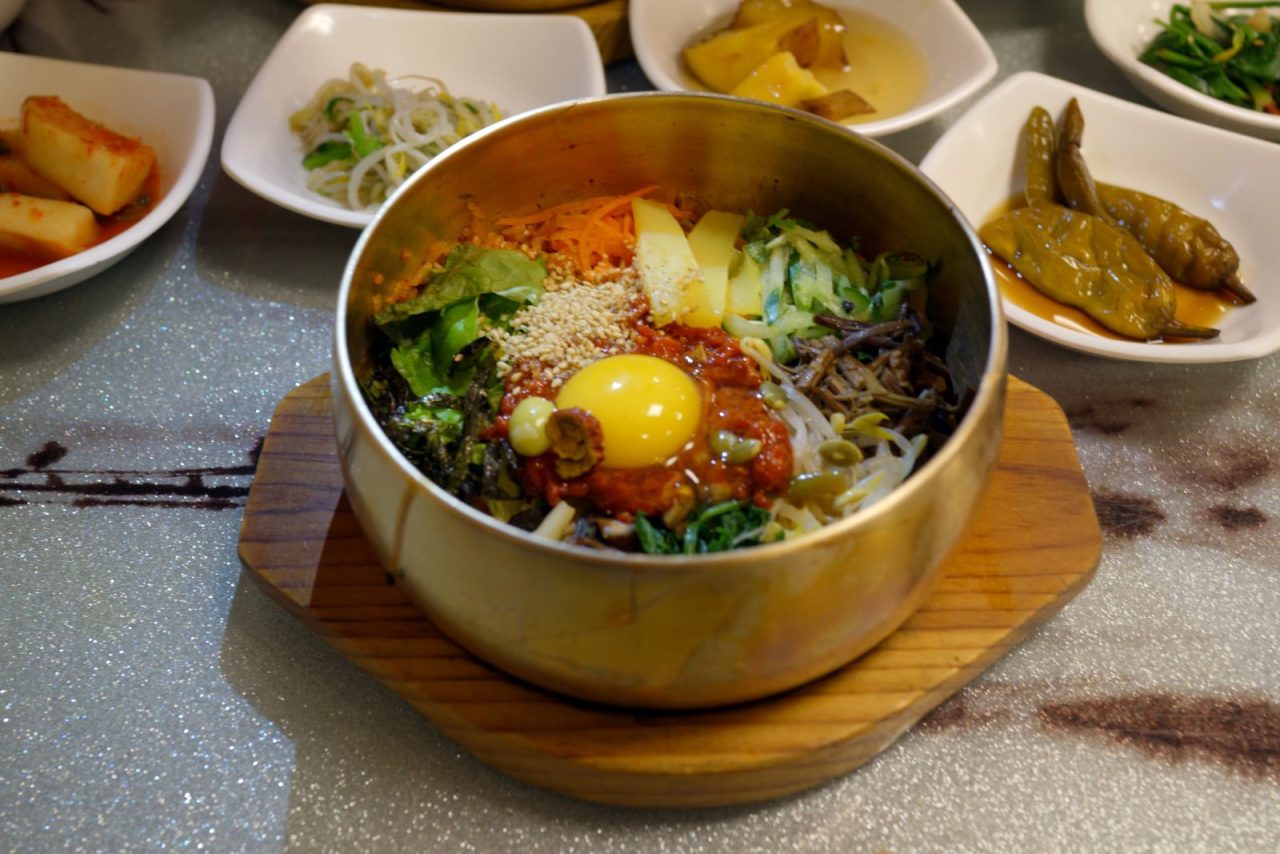
Korean Food for Beginners: What to Order and What to Expect
Get to know bibimbap, bulgogi, gimbap, and tteokbokki, with tips to help you order your first meals in South Korea.
Read guide