For your first Korean barbecue meal, ask a few questions before the meat reaches the grill: how much meat is in a serving, how many servings do you need to order, and who will do the cooking? The answers vary by restaurant, and knowing them makes ordering much easier.
This guide uses samgyeopsal as the main example. It is grilled pork belly, often served with leaves and sauces for wraps, as described in the Korea Tourism Organization’s food guide. The name tells you which cut and dish you are ordering. Portion sizes and prices vary from restaurant to restaurant.
Check how much meat is in “one serving”
On a menu, 1인분 means one serving. Look for the weight written beside it, then ask about the minimum for your first order. You may order a different number of servings from the number of people at the table.
Here is a made-up menu example to show how the calculation works: if a menu says 150 g per serving and the minimum is two servings, the starting meat quantity is 150 × 2 = 300 g. That calculation tells you the quantity being ordered. Whether it is enough for two people depends on their appetites and the rest of the meal.
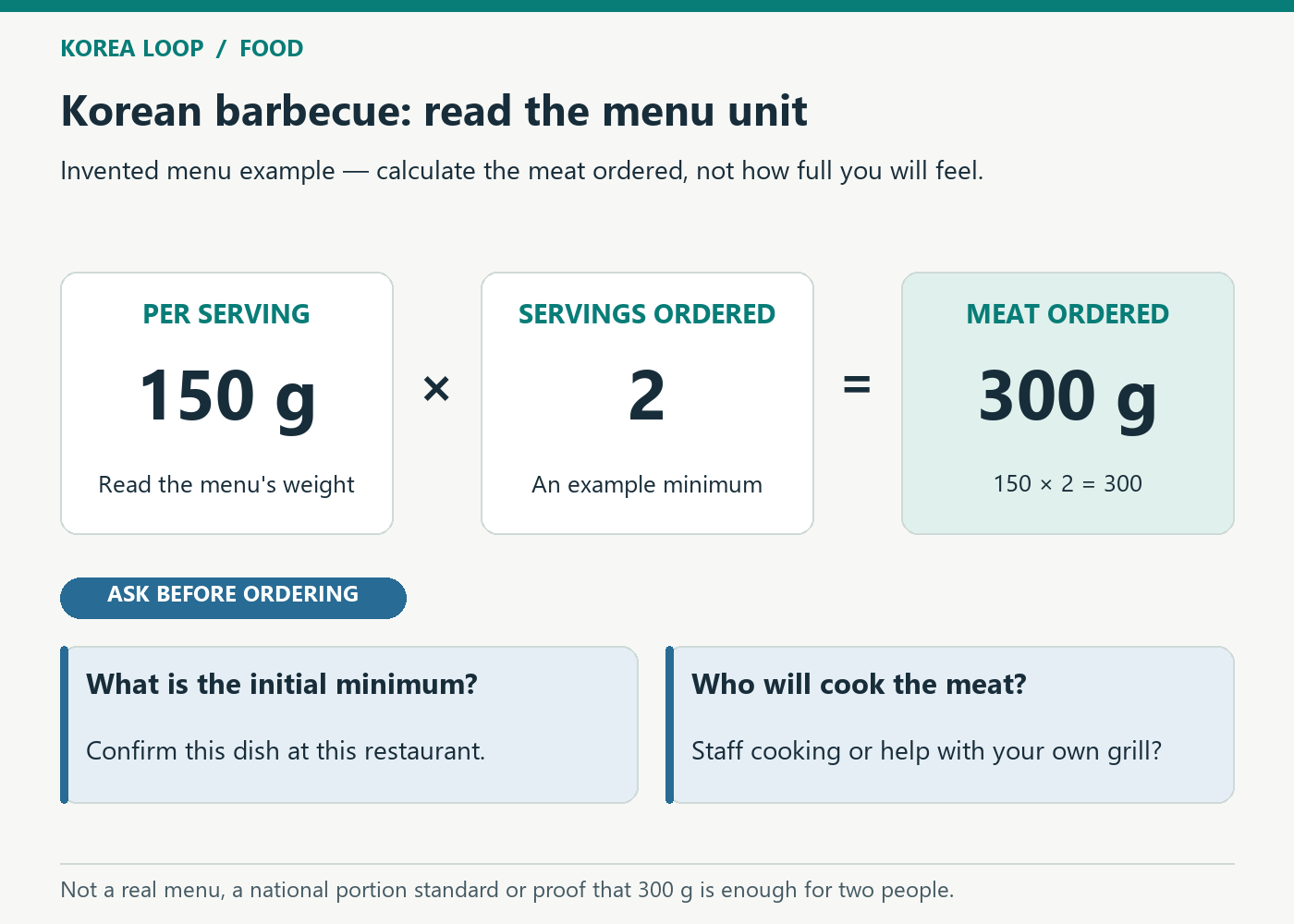
Do not treat a two-serving minimum as a national rule. A KTO restaurant feature illustrates how minimum orders can attach to a specific menu item. Ask about the dish you want at the restaurant you are entering, especially when dining alone.
Four useful questions to ask before ordering
| What you need to know | Korean | Meaning |
|---|---|---|
| Whether a solo order is possible | 혼자 식사할 수 있나요? | Can I dine here alone? |
| The initial minimum | 처음에 몇 인분부터 주문해야 하나요? | How many servings must I order initially? |
| Who cooks | 직접 구워 주시나요? | Will you cook it for us? |
| An additional charge | 추가 비용이 있나요? | Is there an extra charge? |
Scroll the table sideways if needed.
Ask about the minimum before sitting down if it will determine whether you stay. If you need to confirm a particular dish, point to that menu item while asking. Even if the restaurant welcomes solo diners, check the minimum for the dish or set you want.
Find out who will do the cooking
Korean barbecue can involve staff cooking or guests cooking; the KTO food overview describes both styles. Do not infer the arrangement from who first places the meat on the grill. Ask whether staff will continue cooking and when it is ready to eat.
If you are expected to cook and feel unsure, ask for help before starting. Keep the tools and plate used for raw meat separate from ready-to-eat food. The UK Food Standards Agency’s barbecue food-safety guidance supports separating raw and cooked handling and warns that a charred exterior does not establish that the inside is cooked. These are general handling principles, not a statement of Korean restaurant law.
Ask the staff to check doneness rather than following a made-up number of seconds from a travel article. Cuts, thickness and grill conditions differ. Staff can help you with your own grill, so ask them rather than copying another table.
Check the extras before adding more
Before accepting or requesting extras, distinguish what is included from what is separately priced. Ask about rice, noodles, stews, drinks and refills individually when it matters to your budget. The presence of side dishes on a table does not prove that every additional item is free.
Once the initial order is agreed, pause before adding more. You can assess the actual amount, the pace of cooking and your appetite. This is more reliable than applying another traveller’s “servings per person” formula to your table.
Alcohol is entirely optional. Choose a drink you enjoy and include it when checking the bill. If you have an ingredient restriction, ask about sauces, marinades and side dishes before they are mixed with your food; the meat’s name alone does not answer those questions.
Use the bill as a final quantity check
Check that the servings and extras on the bill match what you ordered. If something is unclear, point to the line and ask what it refers to before paying. Keep the original menu price and unit in mind: a per-serving price multiplied by several servings is different from a single set price.
For your next meal, our Korean food guide for beginners introduces other dishes. The same questions help with other dishes too: how much food is included, how is it prepared, and which extras cost more?
Sources checked: 8 September 2026. This guide draws on published sources. The planning examples are our suggestions; this is not a firsthand account of a visit or meal.
Keep exploring
Where to next?
Bibimbap or Dolsot Bibimbap? Choose the Bowl and Check the Ingredients
Compare regular and stone-bowl bibimbap, learn how to ask for gochujang on the side, and check the meat, egg, broth and seasonings used in your dish.
Read guide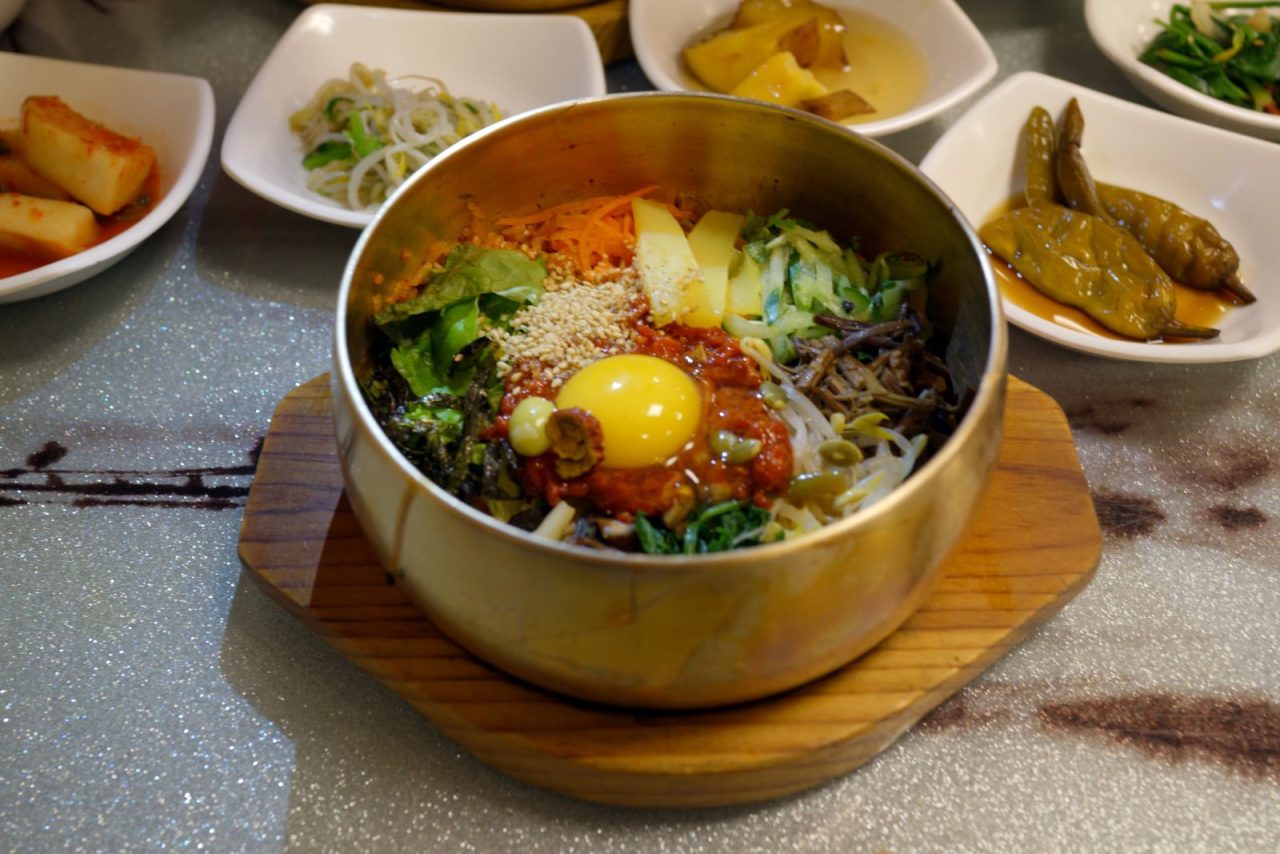
Korean Food for Beginners: What to Order and What to Expect
Get to know bibimbap, bulgogi, gimbap, and tteokbokki, with tips to help you order your first meals in South Korea.
Read guideSeongsan Ilchulbong Without the Climb: Coast and Summit Options
Choose between Seongsan Ilchulbong’s free coastal area and paid summit climb, with practical checks for stairs, weather, opening times and the journey back.
Read guide