When ordering bibimbap, start with the bowl you want, then check the toppings, seasoning and any ingredients you need to avoid. It is easier to ask questions and agree on changes before everything is mixed together.
Regular bibimbap and dolsot bibimbap share the idea of mixing rice with toppings, but the bowl changes how the meal feels to eat. It does not, by itself, tell you whether the meal contains meat, stock, egg or a particular sauce.
Start with the bowl, then read the specific dish
The Korea Tourism Organization’s dolsot guide describes bibimbap served in a hot stone bowl that retains heat. The hot stone bowl is the key difference. The bowl can stay hot while you are eating, so take care around it and ask the staff for help if you need it moved.
| Choice | What to expect | What still needs checking |
|---|---|---|
| Bibimbap | A mixed-rice dish with the listed toppings | The bowl, serving temperature and ingredients |
| Dolsot bibimbap | Rice and toppings served in a stone bowl that stays hot | Meat, egg preparation, rice broth, sauce and extra charges |
Scroll the table sideways if needed.
A hot bowl does not guarantee that the egg will be fully cooked. If that matters, ask for a fully cooked egg or another confirmed arrangement before ordering. The same principle applies to meat: read whether the menu offers cooked beef, raw beef or something else rather than inferring from the word bibimbap.
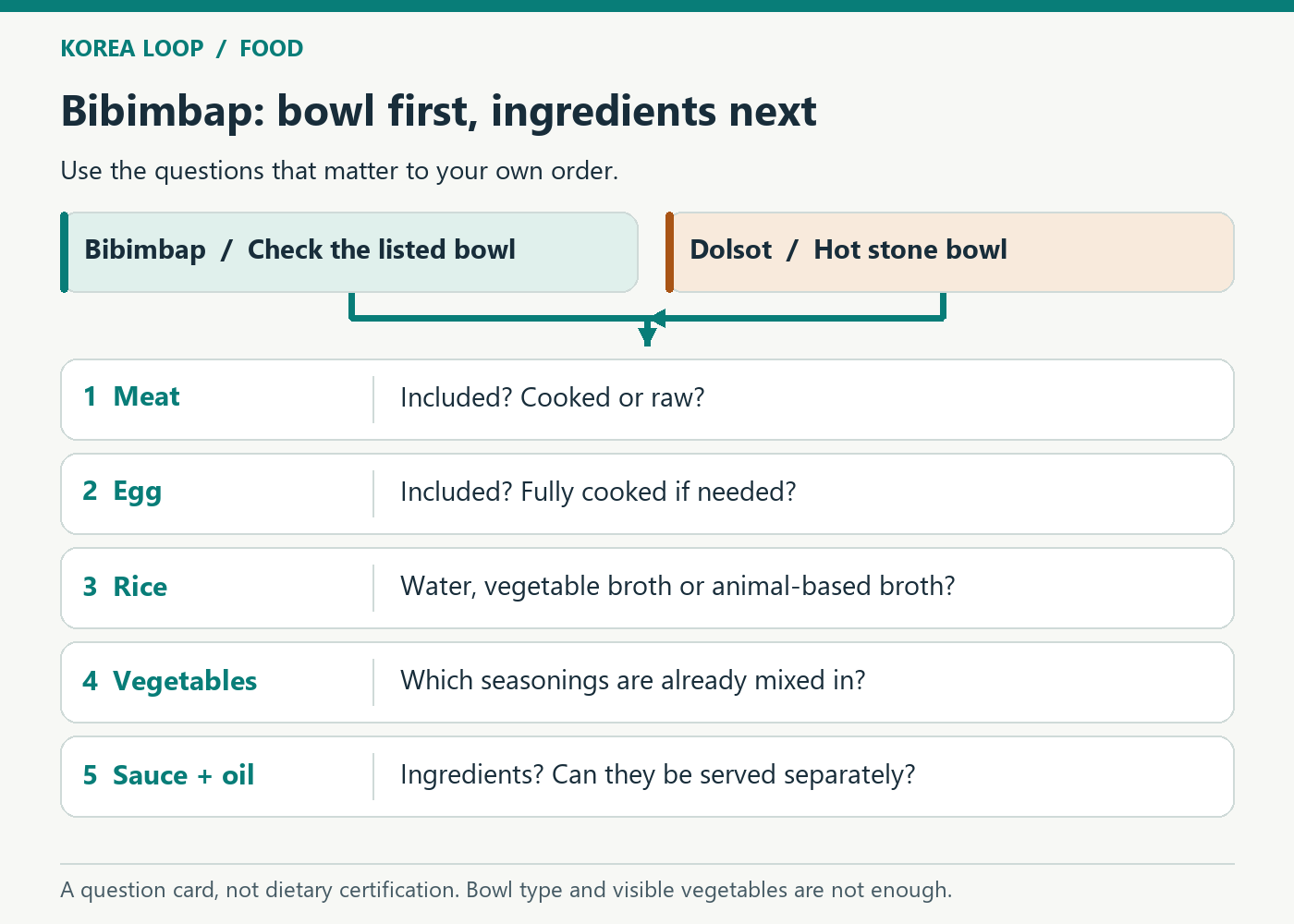
Five parts of the dish to ask about
KTO’s Jeonju bibimbap guide describes variations in beef, egg and the broth used for rice. The Korean Food Promotion Institute’s Jeonju feature also describes ingredients such as beef broth and sesame oil. These examples explain why removing visible beef does not establish that the remaining dish is vegetarian or vegan.
| Ingredient | Ask about the actual preparation |
|---|---|
| Meat | Is it included, and is it cooked or raw? |
| Egg | Is it included, and can it be fully cooked if needed? |
| Rice | Is it cooked with water, vegetable broth or an animal-based broth? |
| Vegetable toppings | What seasonings or sauces have already been added? |
| Sauce and finishing oil | What is in them, and can they be served separately? |
Scroll the table sideways if needed.
You do not need to ask every question if you have no relevant restriction and simply want the listed dish. Pick the questions that matter to what you can or want to eat. When a requirement is important, ask specifically rather than relying on a broad “no meat” request.
Control the sauce before mixing
If you want to adjust the heat and seasoning yourself, ask: 고추장을 따로 주실 수 있나요? — “Could you serve the gochujang separately?” Wait for confirmation; a kitchen may have already seasoned components or may use a fixed preparation.
If sauce is served separately, begin with a smaller amount, mix it through and taste before adding more. This lets you adjust the flavour as you go. The other ingredients may still contain chilli or seasoning before you add the sauce.
When sharing a table with someone who has different requirements, keep their confirmed dish separate. Do not add your sauce or use their spoon to demonstrate mixing unless they want that. If a topping arrives that you did not expect, ask about it before mixing.
If you have an allergy or a strict ingredient restriction
Name the ingredient and ask both about the recipe and shared preparation. The UK government’s allergy guidance supports asking about ingredients and cross-contact; its UK legal requirements should not be assumed to apply to a Korean restaurant. A dish name or photograph in this guide cannot confirm whether it is suitable for you.
Do not treat removal of a topping after service as confirmation that the dish meets your needs. If the staff cannot give a clear answer about a requirement you must follow, choose a different confirmed option or restaurant. A translation card can explain the requirement, but it cannot verify the kitchen’s answer.
A short order you can build on
Point to the dish, confirm the bowl you want, ask your ingredient questions, then ask for the sauce on the side if you would like it. Repeat any agreed changes at the end to make sure you and the staff have understood each other.
That sequence keeps the decision manageable: bowl → ingredients → sauce → confirmation. For more starting options beyond bibimbap, see our Korean food guide for beginners.
Sources checked: 8 September 2026. This guide draws on published sources. The planning examples are our suggestions; this is not a firsthand account of a visit or meal.
Keep exploring
Where to next?
How to Order Korean BBQ: Servings, Minimum Orders and the Grill
Learn how to read Korean BBQ serving sizes and ask about minimum orders, who does the cooking, and extras. Includes tips for handling raw meat at the table.
Read guide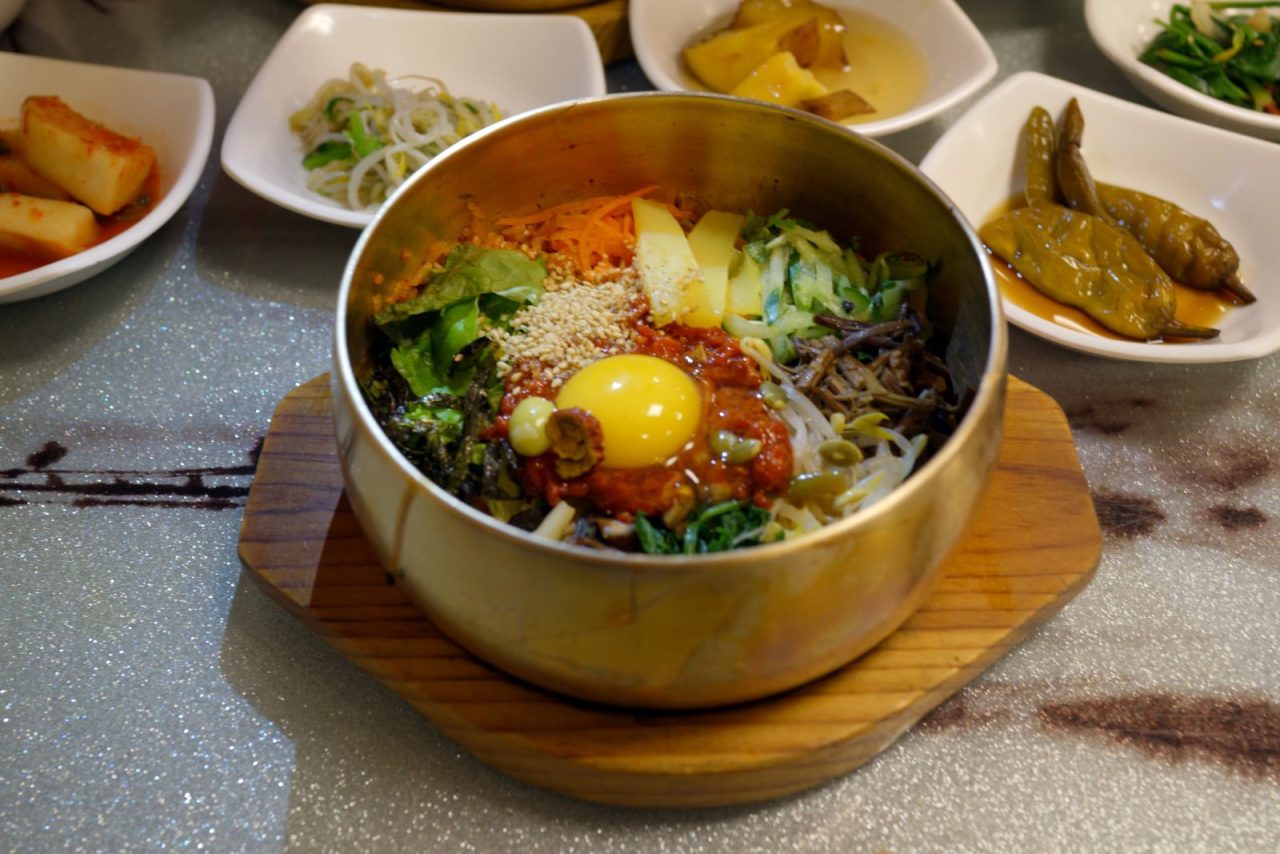
Korean Food for Beginners: What to Order and What to Expect
Get to know bibimbap, bulgogi, gimbap, and tteokbokki, with tips to help you order your first meals in South Korea.
Read guideSeongsan Ilchulbong Without the Climb: Coast and Summit Options
Choose between Seongsan Ilchulbong’s free coastal area and paid summit climb, with practical checks for stairs, weather, opening times and the journey back.
Read guide